
Running a Sex Offender Check in Elbert County
The Georgia Sex Offender Registry is the first public channel for an Elbert County sex offender check. The Georgia Bureau of Investigation and Georgia Crime Information Center operate it, but county sheriffs supply and verify much of the local registration data. Search Elbert County first when the current county is known. A name search can help when an address is not known, while the profile's aliases and physical details help guard against a false match.
A second channel matters when a fact looks stale. The Elbert County Sheriff's Office handles local registration and corrections at 47 Forest Avenue in Elberton. Its public number is 706-283-2421, and posted counter hours are weekdays from 8 a.m. to 5 p.m. GBI's registry line, 404-270-8399, is the state contact. For a person who may live outside Georgia, the federal national search adds other participating jurisdictions.
Elbert County Registry Conditions
The public search begins with a conditions screen, not a list of people. A visitor must choose “I agree” before reaching the search controls. The notice says feeder-agency information changes often, does not guarantee accuracy, and urges checks in other states when the facts point there. Those limits are part of the record, not boilerplate to skip.
The official GBI registry interface shows this consent gate without requiring a visitor to open any individual's profile.
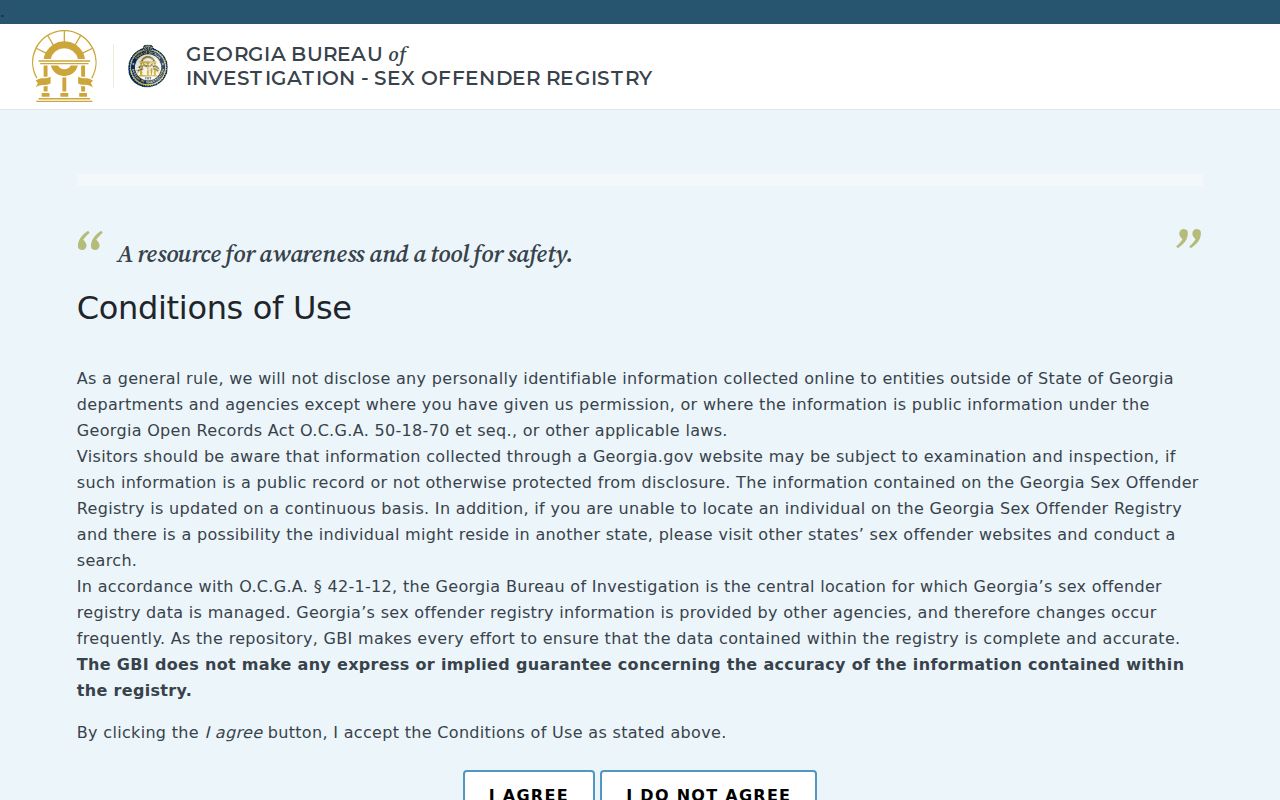
That neutral entry screen is the right place to start an Elbert County sex offender search because it sets the lawful purpose and accuracy limits before any result is read.
Searching the Georgia Sex Offender Registry
Use a narrow search first, then widen it with care. The inspected public controls confirm name and county searching. Post-consent map or radius options can change, so rely on labels displayed in the live portal rather than an old screenshot. Keep the search tied to personal or community safety.
- Open the official registry, read its conditions, and select “I agree” only if the intended use complies.
- Enter the known name, or choose Elbert County to review county results. Check spelling and known aliases.
- Compare the result with age, physical descriptors, status, and offense jurisdiction. Do not match on a photo alone.
- Open the profile, note its update and registering agency, then contact the sheriff about an apparent local error.
| Field label | Type | Required | Use |
|---|---|---|---|
| Conditions | Buttons | Yes | Choose “I agree” or “I do not agree” before search access. |
| Name | Text | Not stated | Search a known name and check spelling or aliases. |
| County | Selection | No | Select Elbert for county-based results. |
| Map or radius | Live portal controls | Not stated | Use only the options shown after consent; controls were not safely exposed in research. |
A broad Elbert County list can contain similar names. Match several fields and the update source before treating a result as relevant.
When Elbert County Registry Searches Miss
No result does not prove that no qualifying history exists. GBI says a person may be newly reported, deceased and removed, not legally required to register, or omitted after successful First Offender treatment. A miss can also come from the wrong spelling, county, or state. Juveniles do not appear unless tried and convicted as adults.
Try known name forms, remove assumptions about a present address, and check each relevant jurisdiction. The Dru Sjodin National Sex Offender Public Website searches participating state, territory, tribal, and federal sources when an Elbert County search alone is too narrow.
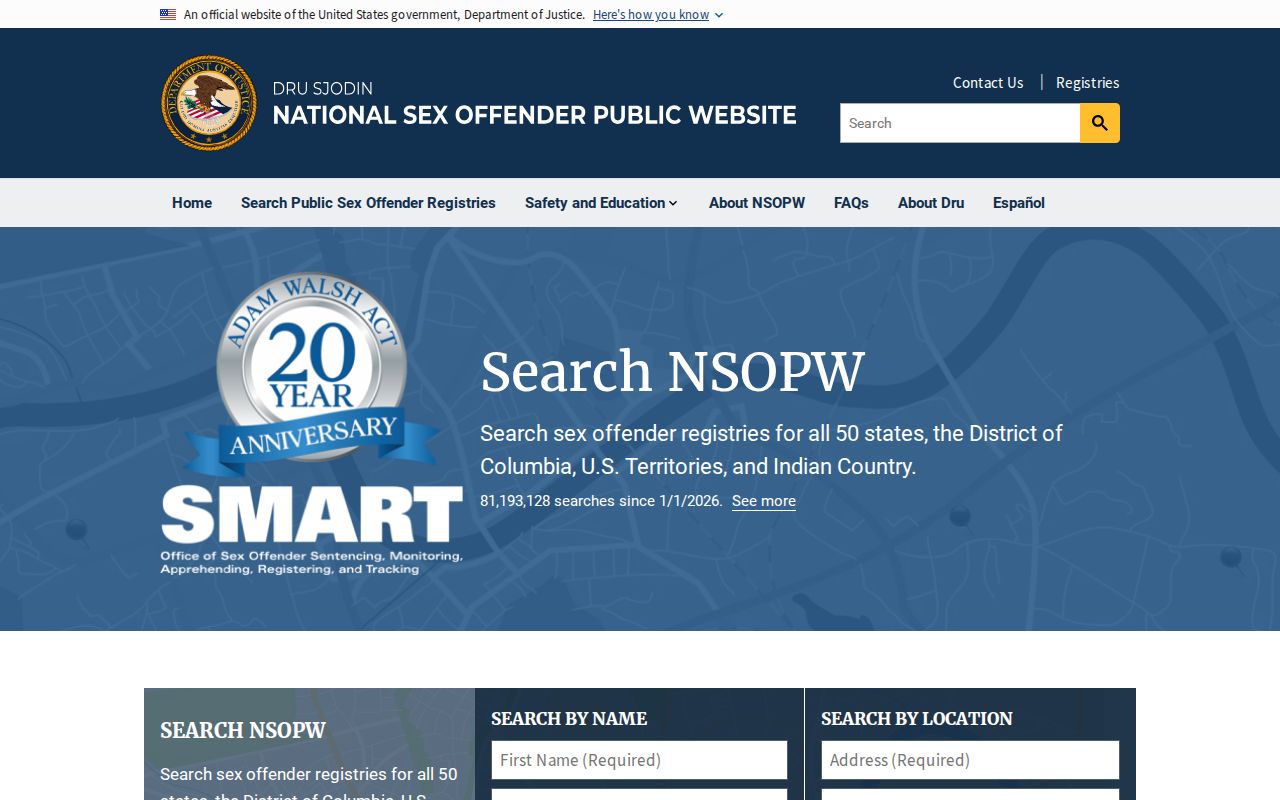
The national layer broadens geography, but the originating registry and Elbert County Sheriff remain the proper sources for a profile's current local details.
What a Registry Profile Shows
A public profile joins identifying details with registration and offense data. Not every field appears on every Elbert County entry. Read the fields as a set. A vehicle, tattoo, or physical trait is an identifier, not proof that a person seen nearby is the listed person. Victim-category data, when published, must never be used to identify a victim.
| Name and aliases | Published name forms used to separate similar identities. |
|---|---|
| Photo and physical description | Photo, sex, race, age or birth date, height, weight, eyes, hair, scars, marks, and tattoos where supplied. |
| Registered location | Residence and county, plus published work or school information when applicable. |
| Offense record | Offense, statute, conviction date, and conviction jurisdiction; labels should be read in that jurisdiction's terms. |
| Risk classification | Level I, Level II, or Sexually Dangerous Predator when a classification is assigned. |
| Status and source | Registration or risk status, verification or update information, and registering agency. |
Address data can change between checks. Save the date and source of the view, but do not republish personal profile details. A registry entry is not the full conviction file; the Elbert County Clerk of Court holds filed Superior and State Court records. Nor does a listing prove current jail custody. The state's Elbert County Jail contact page supplies the official jail phone route for that separate question.
Elbert County Registry Address Corrections
The registry is built through official handoffs. Georgia corrections and parole authorities enter data for state releasees, GBI handles people moving from other jurisdictions, and the Elbert County Sheriff registers and updates local information. GBI says the public system updates daily. Sheriffs are expected to update supplied changes within two business days.
If an Elbert County address seems wrong, record the profile's name, registering agency, and update date. Then report the concern through the sheriff's nonemergency contact. Do not go to the listed home, question neighbors, or try to verify the address in person. The sheriff can compare the report with registration records and decide whether follow-up is required.
Elbert County Sheriff's Office
47 Forest Ave.
Elberton, GA 30635
706-283-2421
Weekdays, 8 a.m.-5 p.m.
Registration Requirements and Levels in Georgia
Georgia's risk labels are not federal-style duration tiers. Registration is generally for life, excluding time in custody, unless a court grants relief under state law. Level I means a low assessed risk and Level II an intermediate assessed risk. A Sexually Dangerous Predator designation carries added verification. The label measures assessed risk and notification handling, not a fixed 10-year, 25-year, or life term.
The GBI risk-assessment classification resource explains the state classification structure.
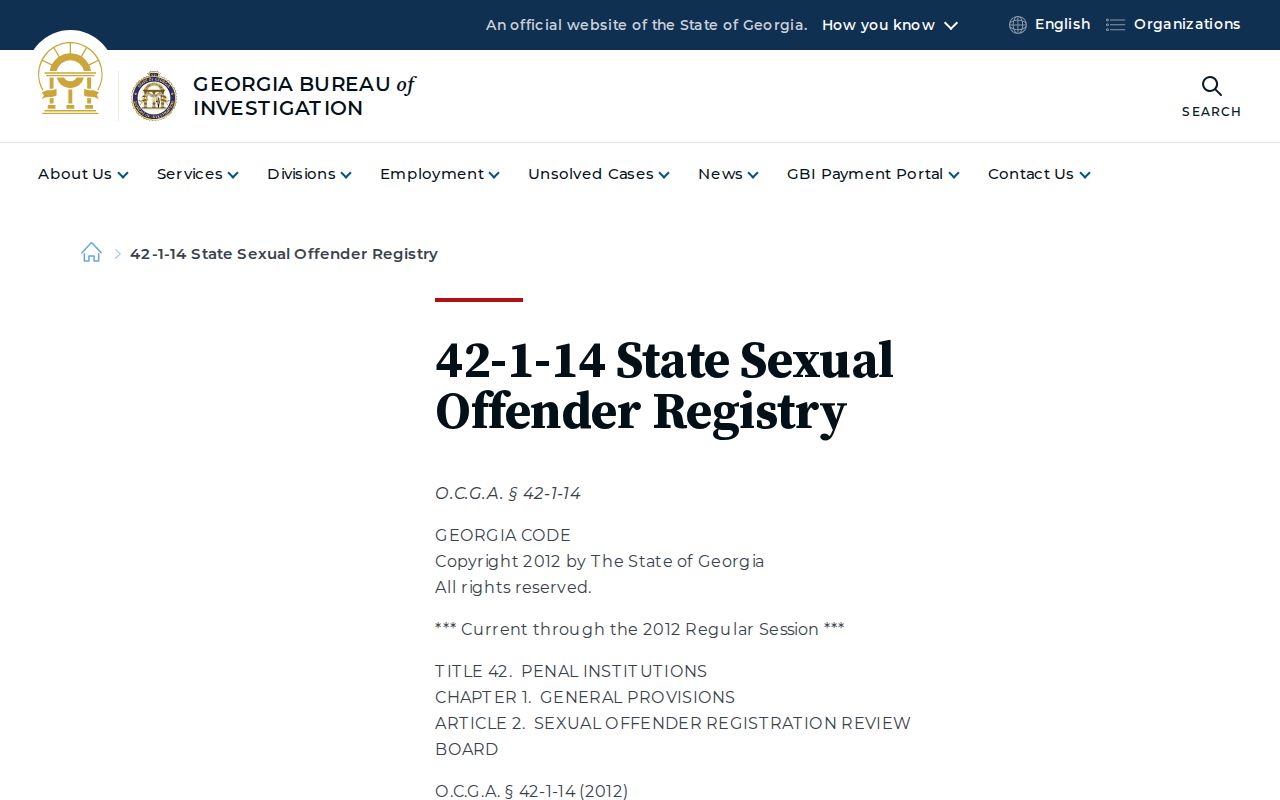
This state source helps an Elbert County reader avoid importing tier rules from another jurisdiction.
| Georgia classification | Duration | Verification duty |
|---|---|---|
| Level I | Baseline registration generally remains lifetime unless a court grants relief. | Annual renewal within 72 hours before the birthday, plus required change reports. |
| Level II | Not a 25-year tier; baseline registration generally remains lifetime unless relieved. | Annual renewal within the same birthday window, plus required change reports. |
| Sexually Dangerous Predator | High-risk designation within the lifetime baseline unless lawful relief applies. | Annual duties plus an additional six-month verification after the birth month. |
Elbert County Registry Deadlines
A registrant generally must report in person within 72 hours of release, placement, or entry into Georgia. Annual renewal occurs within the 72 hours before the person's birthday and includes a current photo and fingerprints. Changes covered by the statute also carry 72-hour reporting duties. The Elbert County Sheriff, rather than GBI headquarters, is the local reporting office.
These short windows explain why a public entry can move or change fast. They do not license a visitor to police compliance. False information or failure to comply can be charged as a serious felony, so concerns should go to law enforcement. Court relief is separate: O.C.G.A. §42-1-19 offers petition paths for some eligible people, including routes tied to ten years after custody and supervision or a Level I assessment. A denied petition generally cannot be filed again for two years.
Elbert County Registry Rule Cautions
Georgia's 1,000-foot provisions in O.C.G.A. §42-1-16 depend on dates, offense facts, locations, and statutory exceptions. A map pin alone cannot establish a violation. The law is not a universal rule that applies in the same way to every Elbert County registrant or every place. Current facts and the controlling version of the statute matter.
That limit is vital when interpreting a search. A profile gives public registration facts; it does not resolve property boundaries, exemption facts, offense dates, or a court order. Send a concrete concern to the sheriff with the location and reason for concern. Let the agency test it against the law.
Lawful Use and Community Notification
The Georgia registry exists for awareness and safety planning. Use it to understand official public information, discuss age-appropriate family safety, or learn which agency can verify a local entry. The profile is not a license to threaten, shame, follow, exclude, or punish anyone. It also should not be treated as a complete criminal-history file.
Community notification flows from Georgia's legal framework and the assessed classification. The sheriff and GBI perform the official roles. A member of the public should report a possible error or noncompliance and then step back. The GBI registry FAQ is the best source for status, omissions, reporting, and duration questions.
Registry misuse warning: O.C.G.A. §42-1-12 warns that using registry information to harass, intimidate, or commit a crime is itself unlawful. Never confront a registrant or household.